
Welcome to TriState Survival. Please log in or sign up.
Total Members
4
Total Posts
4,134
Total Topics
4,132

Ask Mrs. Zombie


  • Forgiving, Tough, and Fun Downstream on Whitewater: Glide Lochsa 3.0 SUP Review
    Started by Admin
    Read 1,896 times
SHARE This Post - Click Here!
Forgiving, Tough, and Fun Downstream on Whitewater: Glide Lochsa 3.0 SUP Review

(Photo/Andrew McLemore)


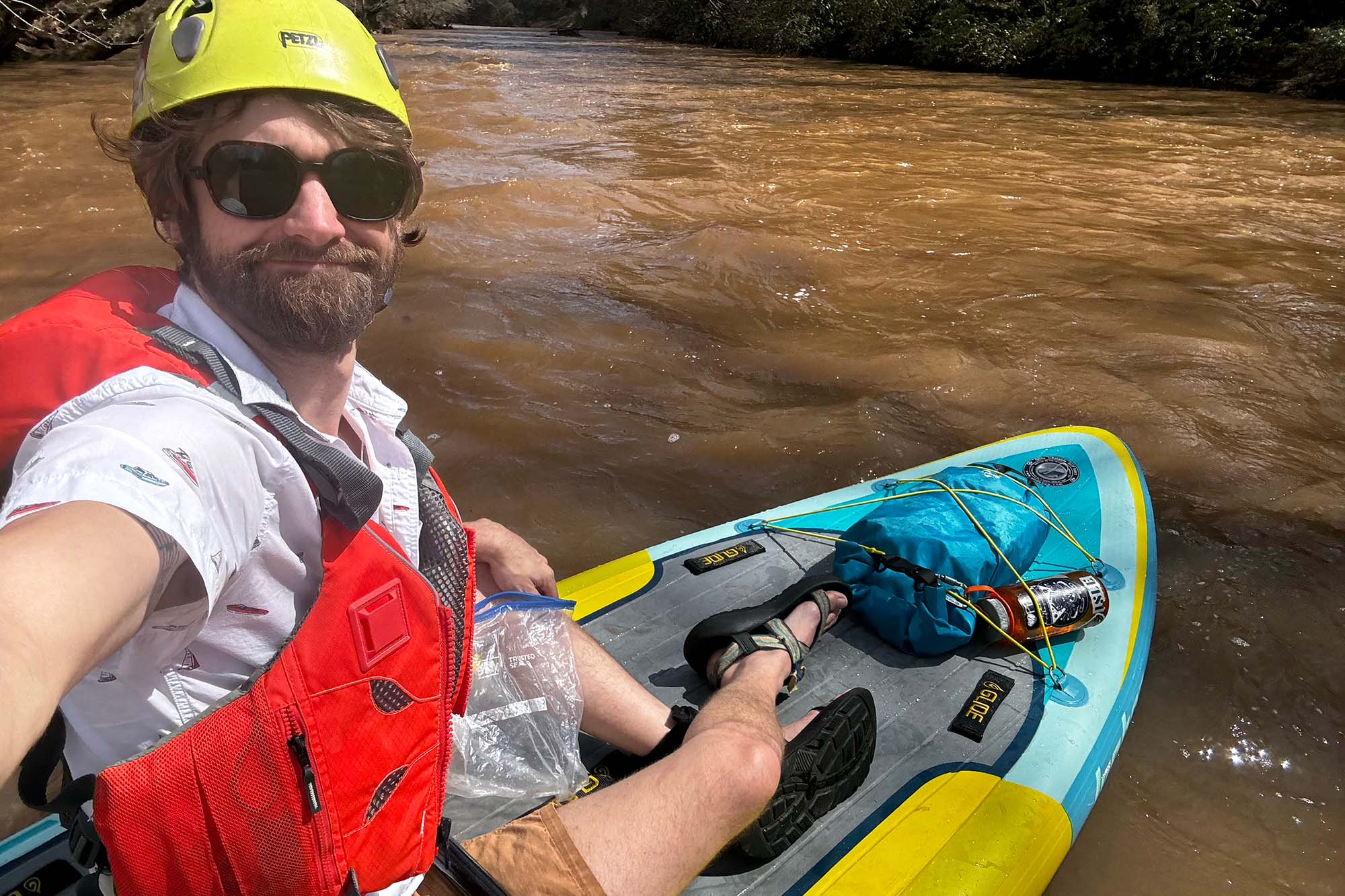
Sometimes, you end up having a much tougher day on the water than you anticipated. That’s what happened to me in March, when I returned to my favorite section of the Chattahoochee River to test the Glide Lochsa Whitewater SUP 3.0 against some Class II-III whitewater.


Unfortunately, I made a classic rookie mistake — I neglected to check the water gauge ahead of time. So I arrived at a roiling, overflowing river that felt a bit intimidating. (I learned later that the USGS water gauge had spiked to well above what’s considered safe for paddlers.) Not being one to back off a challenge, I pumped up the board and embarked on a challenging, physical day on Georgia’s most famous river.


The mega-turbulent waves caused me (even with my excellent balance, of course) to capsize several times. I even lost my paddle, only to miraculously pluck it from the river after 15 minutes of whacking the water with my Chacos. (No, they don’t make for great paddles.)


Thankfully, the Glide Lochsa 3.0 performed admirably and didn’t capsize nearly as often as it might have had I been riding another board. This inflatable SUP board is tailor-made for whitewater adventures, and seems especially well-suited to SUPers taking their first adventures into rougher waters.


In short: Glide has developed the Lochsa into a near-ideal board for SUP paddlers taking their first strokes into whitewater. A kick-rocker design allows for maneuverability over medium-sized waves, while keeping the main section flat, offering a compromise between whitewater performance and stability. With the 3.0, Glide has also trimmed more weight while maintaining durability. The result is a tough-as-nails board that cruises through both boiling eddies and flatwater.


Check out GearJunkie’s guide to the Best Standup Paddleboards


Glide Lochsa 3.0


  • Length:
    9'6"


  • Width:
    36"


  • Thickness:
    6"


  • Weight capacity:
    400 lbs.


  • Weight:
    25 lbs.


  • Tie-down points:
    6


  • Features:
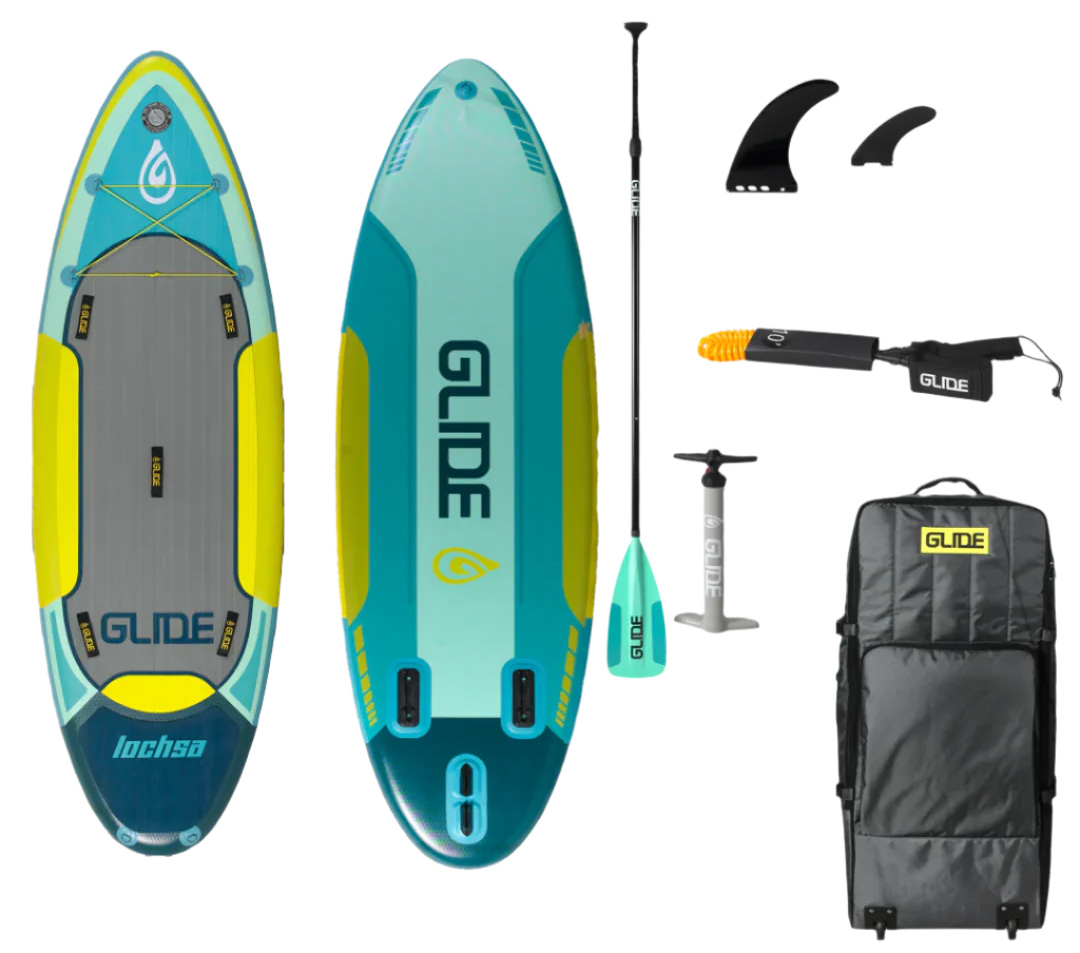
    5 padded grab handles, 6 D-rings, rear kick pad, criss-crossed bungee cord


  • Accessories:
    Three removable fins, wheeled bag with straps, repair kit, coil leash, manual pump


Pros


  • Upgraded, lighter-weight build


  • Kick rocker allows for control over medium waves


  • 36" width balances speed and stability


  • Multiple fin option


  • Great value for full kit


Cons


  • Wide tail reduces stability somewhat


  • Backpack strap broke after second use


Glide Lochsa 3.0 Whitewater SUP Review


glide lochsa 3.0 test 2
(Photo/Andrew McLemore)


Glide, a Salt Lake City–based brand founded in 2014, has a growing reputation for making uber-tough inflatable SUP boards. Over the last few months, I’ve been able to test both the Glide Lochsa 3.0 and the Glide Retro (a full review is pending on that one) in my favorite Georgia rivers: the Etowah and Chattahoochee.


These shallow, rock-filled rivers are ideal places to test inflatable paddleboards. Paddling in Georgia means colliding your board into stake-like boulders, dragging it through rocky river beds too shallow for coasting, and punching it through lots and lots of fallen tree branches.


To put it plainly, a board needs to be durable to survive more than a few river trips here. So far, Glide’s boards have more than lived up to their reputation. As for the Glide Lochsa Whitewater SUP 3.0, specifically, its latest construction includes a triple-layer rail, dual-layer fusion PVC, and a cross-woven core. The rails are also welded.


glide lochsa 3.0 verticals
(Photos/Andrew McLemore)


The result of these upgrades is a board that maintains durability while shaving off more weight. It’s certainly the lightest SUP board I’ve ever tried, while still offering plenty of agility and speed once you put your back into those paddle strokes.


Kick Rocker vs. Continuous Rocker


If you’ve done any standup paddleboarding, you’re probably familiar with the most common design: a long, thin board ideal for moving around the flat water of lakes or easy-going rivers. This shape prioritizes speed and tracking over stability.


Whitewater SUP boards, on the other hand, aim for a wider, shorter profile to maintain stability while tackling the undulating waves of rougher currents. Many elite versions of these boards opt for a continuous rocker shape, meaning you can quickly adjust the nose by shifting your weight forward or backward.


glide lochsa 3.0 comparison 2
The Lochsa’s rear kick-rocker allows for maneuverability over medium waves; (photo/Andrew McLemore)


The Lochsa 3.0, however, uses a kick-rocker design where the middle section remains flat while the nose and tail curve upward. This allowed Glide to narrow the board and maintain stability, while keeping the amount of rocker consistent even while standing at different points along the board surface.


At the same time, paddlers can still comfortably handle medium-sized waves by raising the board or spearing the narrow nose right through them.


A medium-sized kick pad in the rear of the board means you can quickly lift the entire front half of the board. That’s a common feature on whitewater SUP boards. However, I found the Glide’s kicker especially easy (and fun) to use.


It certainly worked during my March outing on the Hooch, when I ended up facing several Class III sections demanding technical paddling. The board performed better than I did. When I cruised through a rough patch by kicking back, it felt great. But the water was rough enough, and I still wiped out numerous times.


glide lochsa 3.0 comparison 1
The Lochsa’s shorter length and wider middle give it more stability than non-whitewater SUP boards; (photo/Andrew McLemore)


Compared to the Competition


The Lochsa has many of the best features to emerge from the last decade’s rapid evolution of inflatable paddleboards. Just like the Hydrus JoyRide, one of GearJunkie’s favorite SUP boards for whitewater, the Lochsa has five soft handles spaced throughout the middle of the board.


There are four D rings at the front of the board, tied together with webbing to hold a small amount of gear. But that’s plenty for a day trip–oriented board like this one.


The Lochsa also maintains an impressive 400-pound capacity despite its shorter length (9’6″) and lower weight. It’s not quite as light as the Badfish SUP Flyweight, our pick for Best Lightweight Standup Paddleboard on GearJunkie’s guide to the Best Standup Paddleboards. But that board’s weight capacity also dips down to 230 pounds. So, I’d argue the Lochsa still offers more flexibility and reliability, by comparison.


glide lochsa 3.0 whitewater
I looked really cool riding the Lochsa 3.0 over these Class II waves. Scout’s honor; (photo/Andrew McLemore)


Also, Glide’s clip-in fins have one of the best designs I’ve seen. Unlike ISLE’s fins, for example, which require you to keep track of a small screw (which I lost almost immediately after my first trip), the Lochsa’s fins can simply slide right in. It also includes a small plastic fastener to keep them in place. These fasteners are tied to the fins with a thin rope.


One of those fasteners’ ropes was sliced through during my second trip on the Lochsa, but it didn’t seem to affect the fin’s reliability or stability in subsequent uses. These short “river fins” worked great for me. Given the shallow rivers I was dealing with, I opted against using the longer dolphin-style fin.


Room for Improvement


glide lochsa 3.0 fins
I opted to use the shorter river fins and avoid the taller dolphin fin; (photo/George McLemore)


There were a few things I didn’t like, too. The Lochsa’s tail is surprisingly rounded, especially compared to its extra-pointy nose. That results in what feels like reduced stability overall. Again, this board is probably not ideal for advanced whitewater SUPers, but rather for beginners and intermediate paddlers.


Glide Lochsa Whitewater SUP: Final Verdict


glide lochsa 3.0 whitewater paddling
(Photo/Glide)


I don’t have photos of myself spearing through whitewater on the Lochsa (paddling photography isn’t easy, folks). So, you’ll just have to trust that I looked as able as the guy above.


But I didn’t just test the board against the rough waters of the upper Chattahoochee. I also took it on a more chill trip down the Etowah with a couple of friends using more typical SUP designs. One had an ISLE Explorer, and the other was on a Glide Retro.


Those boards are designed to handle mellower river water. I found myself cruising ahead, though, taking advantage of the Lochsa’s low weight and smooth agility to speed through flatwater and easy Class I rapids.


The Lochsa is a middle-of-the-road paddleboard that will handle most waves and eddies. It gave me the confidence to tackle water features that felt intimidating on other boards, and stayed nimble for playing on every wave, eddy, and hole.


mountain river whitewater

Watch First Whitewater 'SUP Descent' of Mountain River

Ever wanted to paddleboard off the beaten path? Take inspiration from these four explorers who traveled 230 miles by SUP. Read more…


Source: Forgiving, Tough, and Fun Downstream on Whitewater: Glide Lochsa 3.0 SUP Review

  Link
Forgiving, Tough, and Fun Downstream on Whitewater: Glide Lochsa 3.0 SUP Review

(Photo/Andrew McLemore)


Sometimes, you end up having a much tougher day on the water than you anticipated. That’s what happened to me in March, when I returned to my favorite section of the Chattahoochee River to test the Glide Lochsa Whitewater SUP 3.0 against some Class II-III whitewater.


Unfortunately, I made a classic rookie mistake — I neglected to check the water gauge ahead of time. So I arrived at a roiling, overflowing river that felt a bit intimidating. (I learned later that the USGS water gauge had spiked to well above what’s considered safe for paddlers.) Not being one to back off a challenge, I pumped up the board and embarked on a challenging, physical day on Georgia’s most famous river.


The mega-turbulent waves caused me (even with my excellent balance, of course) to capsize several times. I even lost my paddle, only to miraculously pluck it from the river after 15 minutes of whacking the water with my Chacos. (No, they don’t make for great paddles.)


Thankfully, the Glide Lochsa 3.0 performed admirably and didn’t capsize nearly as often as it might have had I been riding another board. This inflatable SUP board is tailor-made for whitewater adventures, and seems especially well-suited to SUPers taking their first adventures into rougher waters.


In short: Glide has developed the Lochsa into a near-ideal board for SUP paddlers taking their first strokes into whitewater. A kick-rocker design allows for maneuverability over medium-sized waves, while keeping the main section flat, offering a compromise between whitewater performance and stability. With the 3.0, Glide has also trimmed more weight while maintaining durability. The result is a tough-as-nails board that cruises through both boiling eddies and flatwater.


Check out GearJunkie’s guide to the Best Standup Paddleboards


Glide Lochsa 3.0


  • Length:
    9'6"


  • Width:
    36"


  • Thickness:
    6"


  • Weight capacity:
    400 lbs.


  • Weight:
    25 lbs.


  • Tie-down points:
    6


  • Features:
    5 padded grab handles, 6 D-rings, rear kick pad, criss-crossed bungee cord


  • Accessories:
    Three removable fins, wheeled bag with straps, repair kit, coil leash, manual pump


Pros


  • Upgraded, lighter-weight build


  • Kick rocker allows for control over medium waves


  • 36" width balances speed and stability


  • Multiple fin option


  • Great value for full kit


Cons


  • Wide tail reduces stability somewhat


  • Backpack strap broke after second use


Glide Lochsa 3.0 Whitewater SUP Review


glide lochsa 3.0 test 2
(Photo/Andrew McLemore)


Glide, a Salt Lake City–based brand founded in 2014, has a growing reputation for making uber-tough inflatable SUP boards. Over the last few months, I’ve been able to test both the Glide Lochsa 3.0 and the Glide Retro (a full review is pending on that one) in my favorite Georgia rivers: the Etowah and Chattahoochee.


These shallow, rock-filled rivers are ideal places to test inflatable paddleboards. Paddling in Georgia means colliding your board into stake-like boulders, dragging it through rocky river beds too shallow for coasting, and punching it through lots and lots of fallen tree branches.


To put it plainly, a board needs to be durable to survive more than a few river trips here. So far, Glide’s boards have more than lived up to their reputation. As for the Glide Lochsa Whitewater SUP 3.0, specifically, its latest construction includes a triple-layer rail, dual-layer fusion PVC, and a cross-woven core. The rails are also welded.


glide lochsa 3.0 verticals
(Photos/Andrew McLemore)


The result of these upgrades is a board that maintains durability while shaving off more weight. It’s certainly the lightest SUP board I’ve ever tried, while still offering plenty of agility and speed once you put your back into those paddle strokes.


Kick Rocker vs. Continuous Rocker


If you’ve done any standup paddleboarding, you’re probably familiar with the most common design: a long, thin board ideal for moving around the flat water of lakes or easy-going rivers. This shape prioritizes speed and tracking over stability.


Whitewater SUP boards, on the other hand, aim for a wider, shorter profile to maintain stability while tackling the undulating waves of rougher currents. Many elite versions of these boards opt for a continuous rocker shape, meaning you can quickly adjust the nose by shifting your weight forward or backward.


glide lochsa 3.0 comparison 2
The Lochsa’s rear kick-rocker allows for maneuverability over medium waves; (photo/Andrew McLemore)


The Lochsa 3.0, however, uses a kick-rocker design where the middle section remains flat while the nose and tail curve upward. This allowed Glide to narrow the board and maintain stability, while keeping the amount of rocker consistent even while standing at different points along the board surface.


At the same time, paddlers can still comfortably handle medium-sized waves by raising the board or spearing the narrow nose right through them.


A medium-sized kick pad in the rear of the board means you can quickly lift the entire front half of the board. That’s a common feature on whitewater SUP boards. However, I found the Glide’s kicker especially easy (and fun) to use.


It certainly worked during my March outing on the Hooch, when I ended up facing several Class III sections demanding technical paddling. The board performed better than I did. When I cruised through a rough patch by kicking back, it felt great. But the water was rough enough, and I still wiped out numerous times.


glide lochsa 3.0 comparison 1
The Lochsa’s shorter length and wider middle give it more stability than non-whitewater SUP boards; (photo/Andrew McLemore)


Compared to the Competition


The Lochsa has many of the best features to emerge from the last decade’s rapid evolution of inflatable paddleboards. Just like the Hydrus JoyRide, one of GearJunkie’s favorite SUP boards for whitewater, the Lochsa has five soft handles spaced throughout the middle of the board.


There are four D rings at the front of the board, tied together with webbing to hold a small amount of gear. But that’s plenty for a day trip–oriented board like this one.


The Lochsa also maintains an impressive 400-pound capacity despite its shorter length (9’6″) and lower weight. It’s not quite as light as the Badfish SUP Flyweight, our pick for Best Lightweight Standup Paddleboard on GearJunkie’s guide to the Best Standup Paddleboards. But that board’s weight capacity also dips down to 230 pounds. So, I’d argue the Lochsa still offers more flexibility and reliability, by comparison.


glide lochsa 3.0 whitewater
I looked really cool riding the Lochsa 3.0 over these Class II waves. Scout’s honor; (photo/Andrew McLemore)


Also, Glide’s clip-in fins have one of the best designs I’ve seen. Unlike ISLE’s fins, for example, which require you to keep track of a small screw (which I lost almost immediately after my first trip), the Lochsa’s fins can simply slide right in. It also includes a small plastic fastener to keep them in place. These fasteners are tied to the fins with a thin rope.


One of those fasteners’ ropes was sliced through during my second trip on the Lochsa, but it didn’t seem to affect the fin’s reliability or stability in subsequent uses. These short “river fins” worked great for me. Given the shallow rivers I was dealing with, I opted against using the longer dolphin-style fin.


Room for Improvement


glide lochsa 3.0 fins
I opted to use the shorter river fins and avoid the taller dolphin fin; (photo/George McLemore)


There were a few things I didn’t like, too. The Lochsa’s tail is surprisingly rounded, especially compared to its extra-pointy nose. That results in what feels like reduced stability overall. Again, this board is probably not ideal for advanced whitewater SUPers, but rather for beginners and intermediate paddlers.


Glide Lochsa Whitewater SUP: Final Verdict


glide lochsa 3.0 whitewater paddling
(Photo/Glide)


I don’t have photos of myself spearing through whitewater on the Lochsa (paddling photography isn’t easy, folks). So, you’ll just have to trust that I looked as able as the guy above.


But I didn’t just test the board against the rough waters of the upper Chattahoochee. I also took it on a more chill trip down the Etowah with a couple of friends using more typical SUP designs. One had an ISLE Explorer, and the other was on a Glide Retro.


Those boards are designed to handle mellower river water. I found myself cruising ahead, though, taking advantage of the Lochsa’s low weight and smooth agility to speed through flatwater and easy Class I rapids.


The Lochsa is a middle-of-the-road paddleboard that will handle most waves and eddies. It gave me the confidence to tackle water features that felt intimidating on other boards, and stayed nimble for playing on every wave, eddy, and hole.


mountain river whitewater

Watch First Whitewater 'SUP Descent' of Mountain River

Ever wanted to paddleboard off the beaten path? Take inspiration from these four explorers who traveled 230 miles by SUP. Read more…


Source: Forgiving, Tough, and Fun Downstream on Whitewater: Glide Lochsa 3.0 SUP Review
  •  

Similar topics (5)